The buying workbook
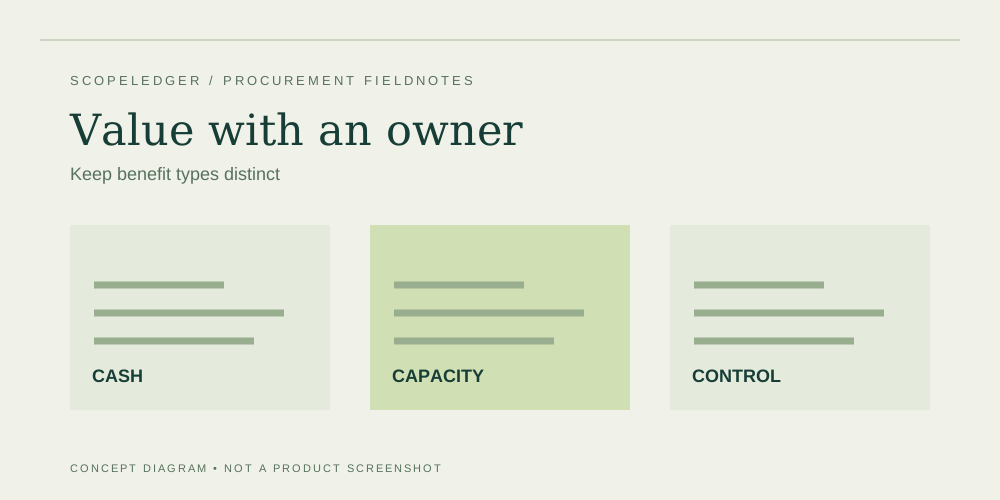
ERP business case: separate cash savings from capacity
Build an ERP business case using documented baseline work, measurable outcomes, explicit benefit owners, and a transparent distinction between cash and capacity.
Build a multi-year budget from seats, subscriptions, implementation, and annual operations.
All starting values are illustrative inputs, not a vendor quote or an industry average. Enter the licensed user count, the monthly price per user from your written quote, and a whole-year horizon. One-time implementation includes the migration, configuration, training, and project services you choose to include. Annual operations should include recurring integrations, support, hosting, and administration that are outside the seat price. Avoid counting a bundled item twice.
The subscription calculation is users × monthly seat price × 12, summed across each year after applying the annual uplift. Operations equal annual operations × years. Total equals implementation + subscription + operations. With 25 users at an illustrative $80 monthly, three years, no uplift, $30,000 implementation, and $6,000 annual operations, subscription is $72,000 and total is $120,000.
This model keeps users and operations constant. It excludes taxes, discounting, staged rollouts, partial years, and foreign exchange. Run separate scenarios for user growth or changing scope. An uplift is a scenario assumption, never a prediction or a contractual right.
The buying workbook
Build an ERP business case using documented baseline work, measurable outcomes, explicit benefit owners, and a transparent distinction between cash and capacity.
The cost ledger
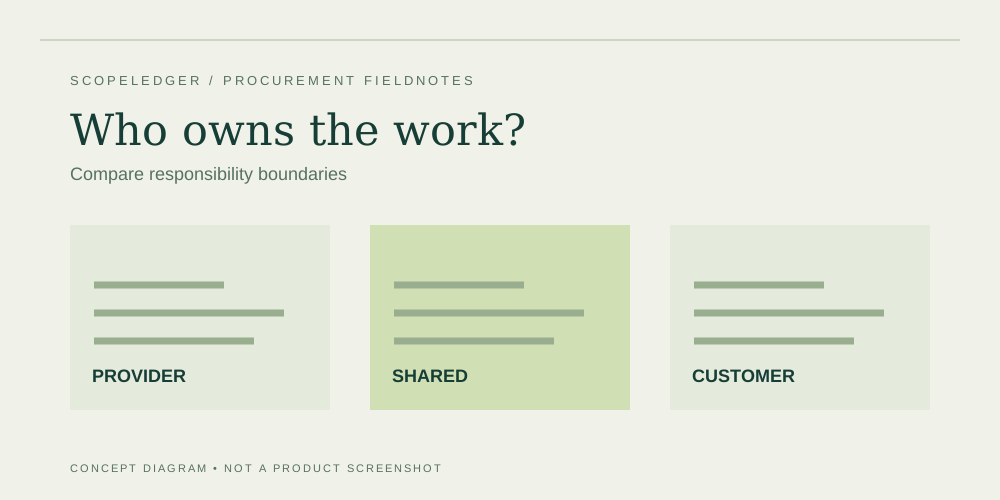
Compare cloud and self-managed ERP by operational ownership, environments, upgrade duties, recovery needs, and the costs assigned to your team.
The buying workbook
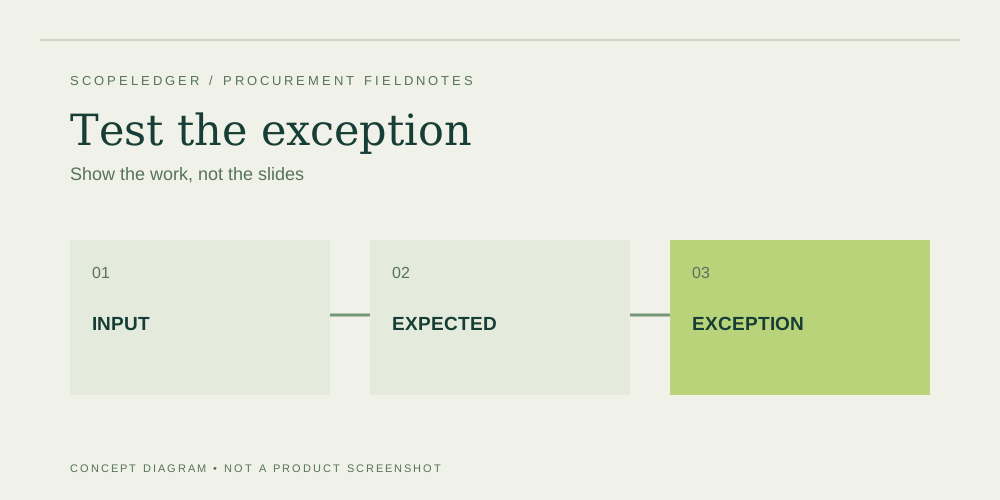
Create a repeatable ERP demonstration script with realistic inputs, expected outputs, exception paths, and evidence for each mandatory workflow.
The cost ledger
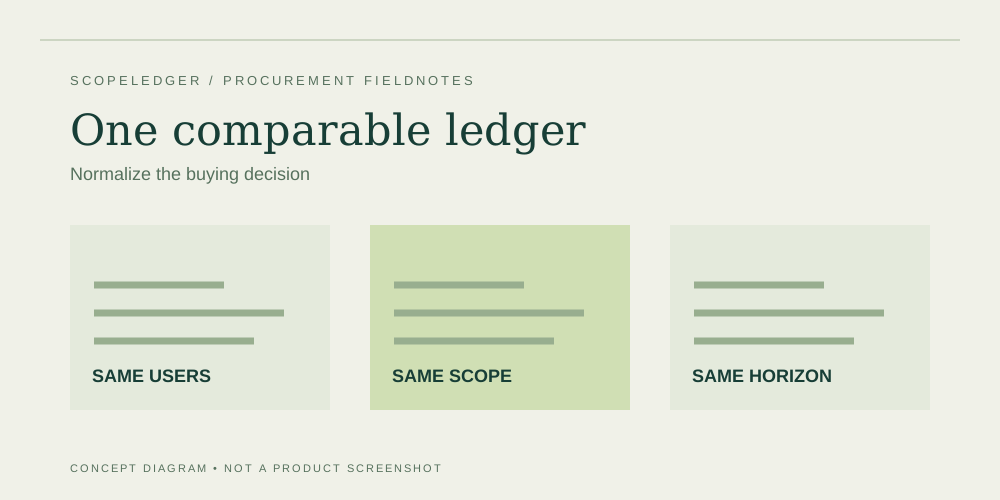
Compare ERP proposals using a common scope, license map, delivery plan, and budget horizon instead of a single advertised monthly price.
The cost ledger
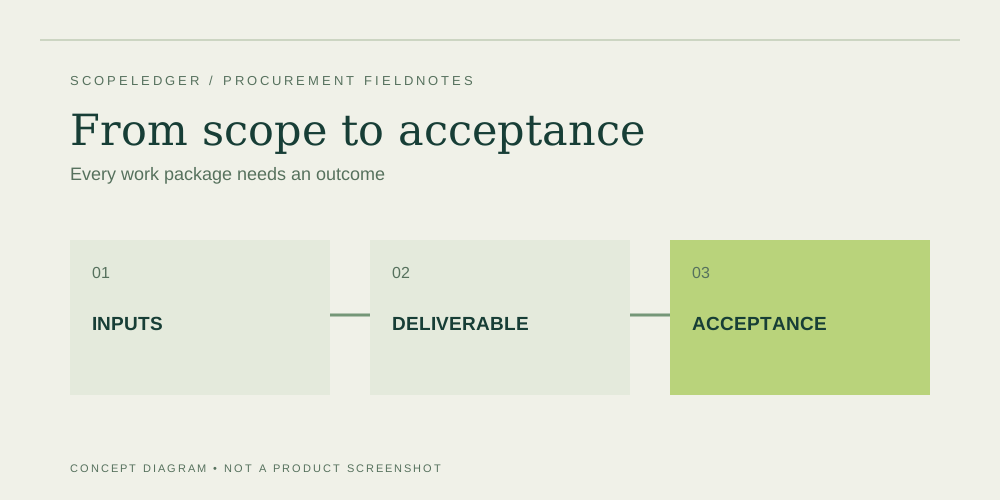
Break an ERP statement of work into configuration, migration, integration, training, testing, and cutover with clear acceptance criteria.
The cost ledger
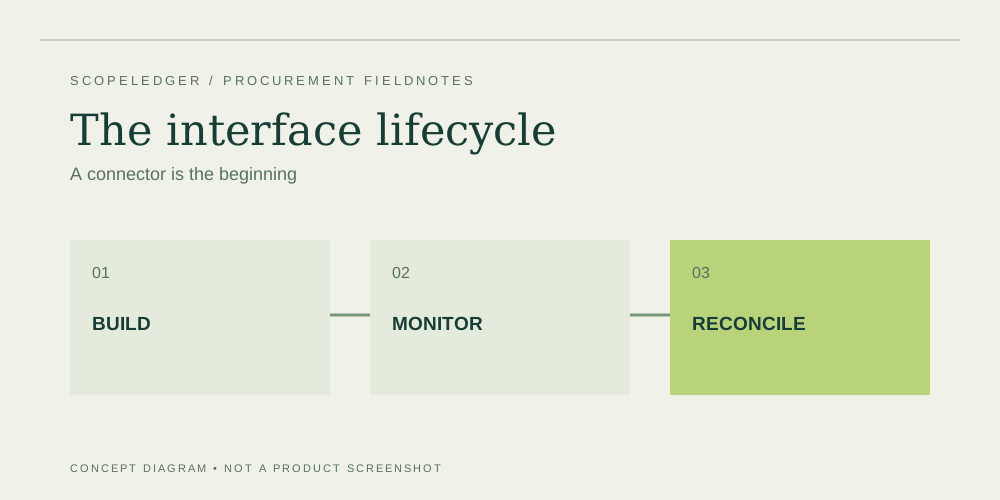
Estimate ERP interfaces by data flow, failure handling, monitoring, ownership, and change impact rather than a connector name alone.